Location Strategy·8 min read
Operating healthcare facilities are some of the most challenging — and most requested — location types in the tristate region. Here is what actually makes access work.
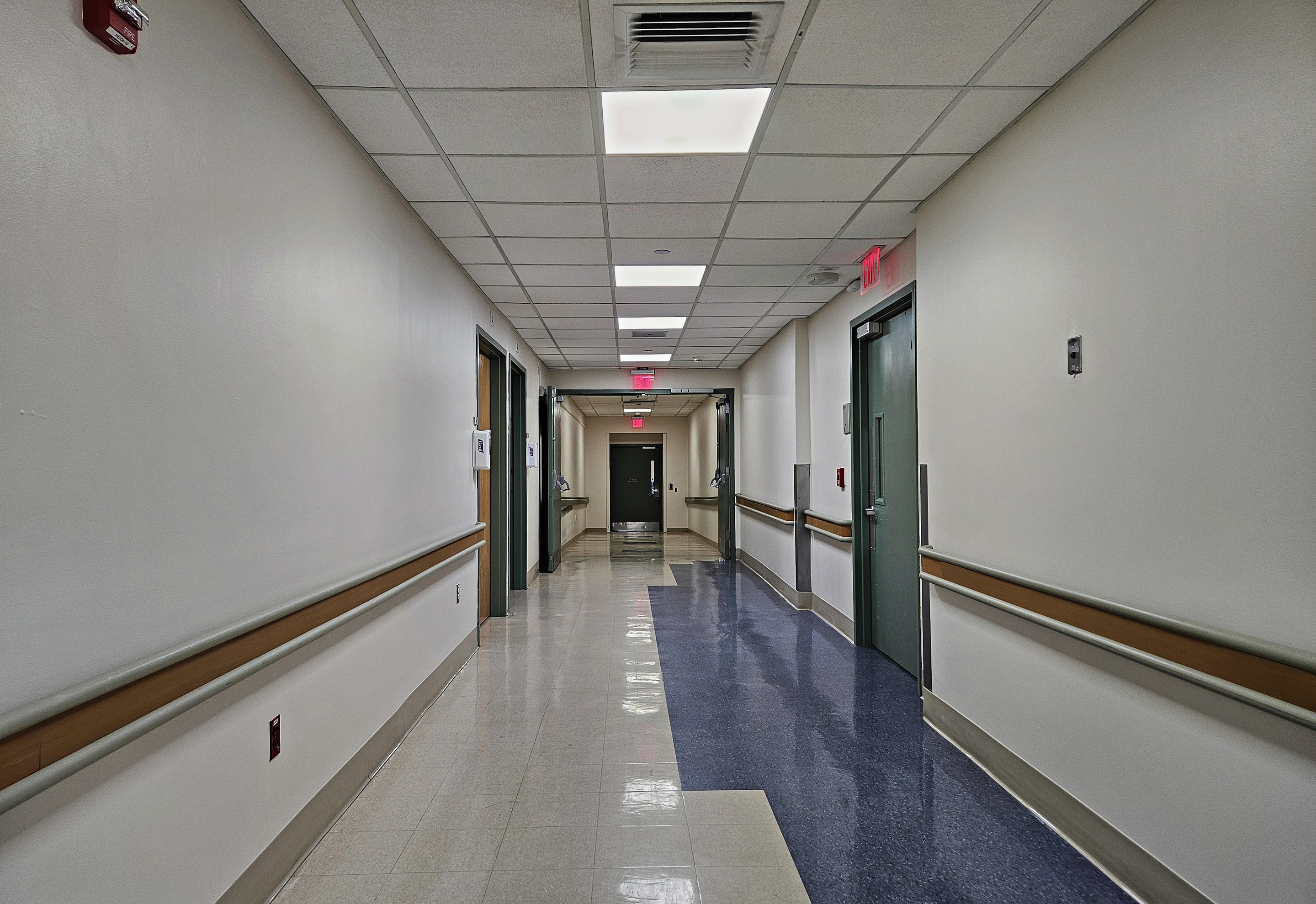
A hospital is not simply a building that looks clinical on screen. It is an operating infrastructure with active patients, regulated workflows, union staff, infection-control protocols, and a legal obligation to maintain continuity of care. None of that pauses for a production.
That distinction matters before you make a single call. Locations that can be hired for a weekend with a standard permit — warehouses, residences, offices — operate on a fundamentally different logic than facilities where the environment itself is the product being delivered to other people 24 hours a day.
Productions that approach hospital access the same way they would approach a vacant building tend to find that access unavailable — not because hospitals never cooperate, but because the framing was wrong from the start.
The question is not whether the space looks right. It is whether the people operating it can manage a production alongside their primary responsibility.
Productions requesting hospital access typically fall into one of a few scenarios. An emergency department or trauma bay — the high-stakes, high-visual-interest spaces that read immediately on screen. A corridor, nurses station, or patient ward — environments that establish institutional context. An operating theater or clinical procedure room — rarely achievable in an active facility, more often sourced from decommissioned wings or purpose-built studio sets.
The distinction between active and decommissioned is more important than the visual difference suggests. An active emergency department with equipment, staffing, and real operational flow creates an authenticity no set can replicate — but it demands a completely different access arrangement than a closed wing that can be dressed and lit without disruption.
Knowing which you need — and being honest about it early — is the difference between a conversation and a failed outreach.
Any facility administrator who agrees to a production is managing risk on multiple fronts simultaneously: patient privacy under HIPAA, staff safety and union agreements, infection control, visitor policies, equipment liability, and reputational exposure if something goes wrong on camera.
Productions that understand this — and arrive with documentation and plans that address it proactively — move through the approval process faster and on better terms. Productions that treat it as an obstacle or a formality get closed doors.
The facility does not need to love your project. It needs to trust that your crew will not make their job harder.
Even in the most cooperative arrangement, hospital logistics are compressed. Parking is typically a solved problem elsewhere — hospitals do not have excess lots available for production vehicles. Basecamp positioning requires a location that does not conflict with patient drop-off, emergency access lanes, or ambulance routing.
Timing windows depend entirely on the facility's activity calendar. Overnight shoots in low-census areas exist but require department-by-department sign-off. Weekend access to elective procedure areas is more achievable than access to high-volume emergency services on a Friday evening.
The access plan needs to be mapped and approved before a permit is pulled, not after.
In a private residence or commercial space, the owner's approval is a transaction. In a hospital, approval is layered: the facility administration, the department head, the compliance or legal office, and in many cases a facilities or operations manager who has final word on physical access.
Getting the right contact on the first outreach matters more here than almost anywhere else. An inquiry that lands with the wrong person — or that asks for something without framing it correctly — will get closed before it reaches anyone who could actually say yes.
Relationships with facility contacts, built over time and maintained correctly, are what make access possible in the first place.
Practical checklist
Reset represents operating and semi-operating healthcare facilities in the NJ / NY / PA corridor — facilities where we have existing relationships with the people who make access decisions. We do not list them publicly. We do not advertise their addresses. We introduce them to specific productions, with specific needs, at the right moment.
When a production submits an access request through Reset, the brief goes to a person, not a form processor. We assess whether the request fits what we represent, and whether the timing and terms are workable. If it is a realistic match, we make the introduction directly.
The process protects the facility. It also protects the production from spending weeks in outreach that was never going to convert.
READY TO START
Tell us what your production actually needs. We'll tell you what we can access.